Sustainable farming isn’t just the latest industry buzzword; it’s a smart, forward-thinking strategy for the future of UK agriculture. At its heart, it’s about striking a careful balance between environmental health, economic profitability, and social wellbeing. This ensures your farm doesn’t just survive but thrives for generations to come.
A New Approach to Farming for the Future
So, what is sustainable farming in practice? It’s less about a strict rulebook and more about embracing a mindset of continuous improvement. We’re shifting away from simply maintaining our resources and moving towards actively regenerating them.
Think of it like a three-legged stool. For the farm to be stable and successful, all three legs—environment, economy, and community—must be equally strong. If one is weak, the whole system becomes wobbly.
This way of thinking is quickly becoming essential for modern UK farms. The market for sustainably produced goods is booming, with projections suggesting a jump from around £380 million to over £925 million by 2033. This growth is being fuelled by farmers adopting regenerative methods that actively rebuild soil health, slash waste, and help tackle climate change. You can learn more about the rise of sustainable agriculture in the UK and see how the movement is gathering pace.
Sustainable farming is fundamentally about future-proofing your operation. It’s about building a business that can withstand economic shocks, adapt to a changing climate, and continue to feed the nation without draining the very natural resources it depends on.
The Three Core Pillars
To really get to grips with this, it helps to break it down into its three foundational principles. Each pillar supports the others, creating a farming system that’s both robust and resilient.
Let’s take a closer look at what each one means on the ground.
The Three Pillars of Sustainable Farming at a Glance
This table breaks down the three core pillars, showing what each one aims to achieve and how it looks in day-to-day farming.
| Pillar | Core Goal | Examples in Practice |
|---|---|---|
| Environmental Stewardship | To protect and actively enhance the natural world. | Improving soil health with cover crops, creating wildlife habitats, managing water use efficiently, and reducing reliance on chemical inputs. |
| Economic Profitability | To build a financially secure and efficient business. | Cutting input costs through precision technology, diversifying income streams, and improving overall operational efficiency to boost the bottom line. |
| Social Responsibility | To positively impact employees, the local community, and consumers. | Ensuring fair working conditions, engaging with the local economy, and producing high-quality, safe food for the public. |
By weaving these three strands together, you create a system that isn’t just good for the planet. It strengthens your business, makes it more resilient, and secures the future of your farming legacy.
The Three Pillars of Sustainable Farming Explained
To really get to grips with sustainable farming, we need to break it down into its three core pillars: Environmental Stewardship, Economic Profitability, and Social Responsibility. These aren’t separate boxes to tick; they’re completely intertwined. A farm can’t truly be sustainable in the long run if it’s brilliant in one area but failing in another.
Think of it like a three-legged stool. A farm with fantastic biodiversity that consistently loses money isn’t a viable business. In the same way, a highly profitable farm that degrades its soil or pollutes local waterways is effectively stealing from its own future. Real, lasting resilience only comes when all three legs are strong and balanced.
This concept map helps visualise how the central idea of ‘farming’ is supported by these three essential pillars, all working together to create a healthy, robust operation.
As you can see, true sustainability is much more than just being ‘green’. It’s a complete strategy that weaves together profit and people to build a farm that’s fit for the future.
Environmental Stewardship
This is the pillar that most people think of first. At its heart, it’s about working with nature, not against it. The aim is to protect and even improve the land, water, and air that your farm relies on, ultimately leaving the environment in better shape than you found it.
On a practical level for a UK farm, this means getting your hands dirty with actions that build natural resilience. For instance, moving to a minimum or no-till system helps protect the soil’s structure, which stops it from blowing or washing away and makes it better at holding water.
Other key practices include:
- Boosting Biodiversity: Planting wildflower margins or beetle banks creates a home for beneficial insects that can act as your own private pest control team.
- Improving Soil Health: Using cover crops to keep the ground covered between cash crops is a game-changer. It prevents erosion and, just as importantly, adds crucial organic matter back into the soil.
- Managing Water Responsibly: This could mean anything from installing more efficient irrigation systems to creating buffer strips along watercourses to stop valuable nutrients from washing away.
Economic Profitability
Let’s be clear: a farm is a business. For any of this to work, it has to make financial sense. This pillar is all about building a profitable, efficient, and resilient operation that can handle volatile markets and whatever else gets thrown at it. This is about smart business, not just green ideals.
Happily, many sustainable methods can directly boost your bottom line. Precision farming technology, for example, allows you to apply fertiliser and sprays exactly where they’re needed, and nowhere else. That alone can slash your input costs and cut down on waste.
There’s a persistent myth that going sustainable means sacrificing profit. In reality, it often leads to a more stable and profitable business over the long haul by reducing expensive inputs, improving soil for more reliable yields, and even opening doors to new markets.
And let’s not forget government schemes like the Sustainable Farming Incentive (SFI), which offer direct payments for adopting these kinds of practices. It turns good environmental work into a dependable revenue stream.
Social Responsibility
The final pillar reminds us that farms don’t exist in a vacuum; they are a vital part of the wider community. This covers everything from offering fair wages and safe working conditions for your team to supporting the local economy and, of course, producing quality food for the country.
This social aspect is fundamental to the health of our rural areas. By creating good jobs, buying from local suppliers, and maintaining the landscape we all cherish, sustainable farms become true community assets. It’s about building a positive legacy and making sure British farming remains a respected and essential part of our national life for generations to come.
Common Sustainable Practices on UK Farms
Knowing the principles is a great start, but it’s the on-the-ground action that really counts. Across the UK, farmers are adopting a whole host of clever, practical techniques to build soil health, trim their overheads, and create more robust businesses. These aren’t just abstract ideas; they’re proven methods being put to work on arable and mixed farms every single day.
A lot of these approaches are about working with nature, not fighting against it. By making soil health the top priority, you can slash your reliance on costly inputs and build a more self-sufficient, productive farm for the long haul.
Let’s dig into some of the cornerstone practices making a real difference.
Protecting and Building Soil Health
Your soil is your single most valuable asset. Looking after it sits at the very heart of sustainable farming, and two key methods are changing how UK farmers manage their land.
- Conservation Tillage: This covers everything from minimum-tillage (min-till) to no-till farming. By disturbing the soil as little as possible, you protect its structure, prevent erosion from wind and rain, and keep precious moisture locked in. It’s also a fantastic way to cut down on fuel and labour costs from repeated passes with the cultivator.
- Cover Cropping: Sowing a ‘green manure’ like clover or vetch between your main cash crops is a game-changer. It keeps the soil covered and protected, stops nutrients from washing away, smothers weeds, and adds vital organic matter back into the ground. It’s a brilliant way to naturally boost fertility for the next season.
Smarter Management of Pests and Nutrients
Sustainable farming isn’t about eliminating inputs; it’s about using them more intelligently. This means moving away from routine, blanket spraying and embracing more targeted, strategic solutions for pest control and crop nutrition.
A perfect example is Integrated Pest Management (IPM). It’s a thoughtful approach that uses a combination of tactics to keep pests below damaging levels, rather than just reaching for the sprayer first. IPM involves careful monitoring, encouraging natural predators, and only turning to chemicals as a genuine last resort.
Crop rotation is one of the oldest tricks in the book for a reason—it works. By simply changing the crop you grow in a field each year, you can naturally break pest and disease cycles, improve soil structure, and significantly reduce the need for chemical intervention.
Efficiency Through Precision and Organisation
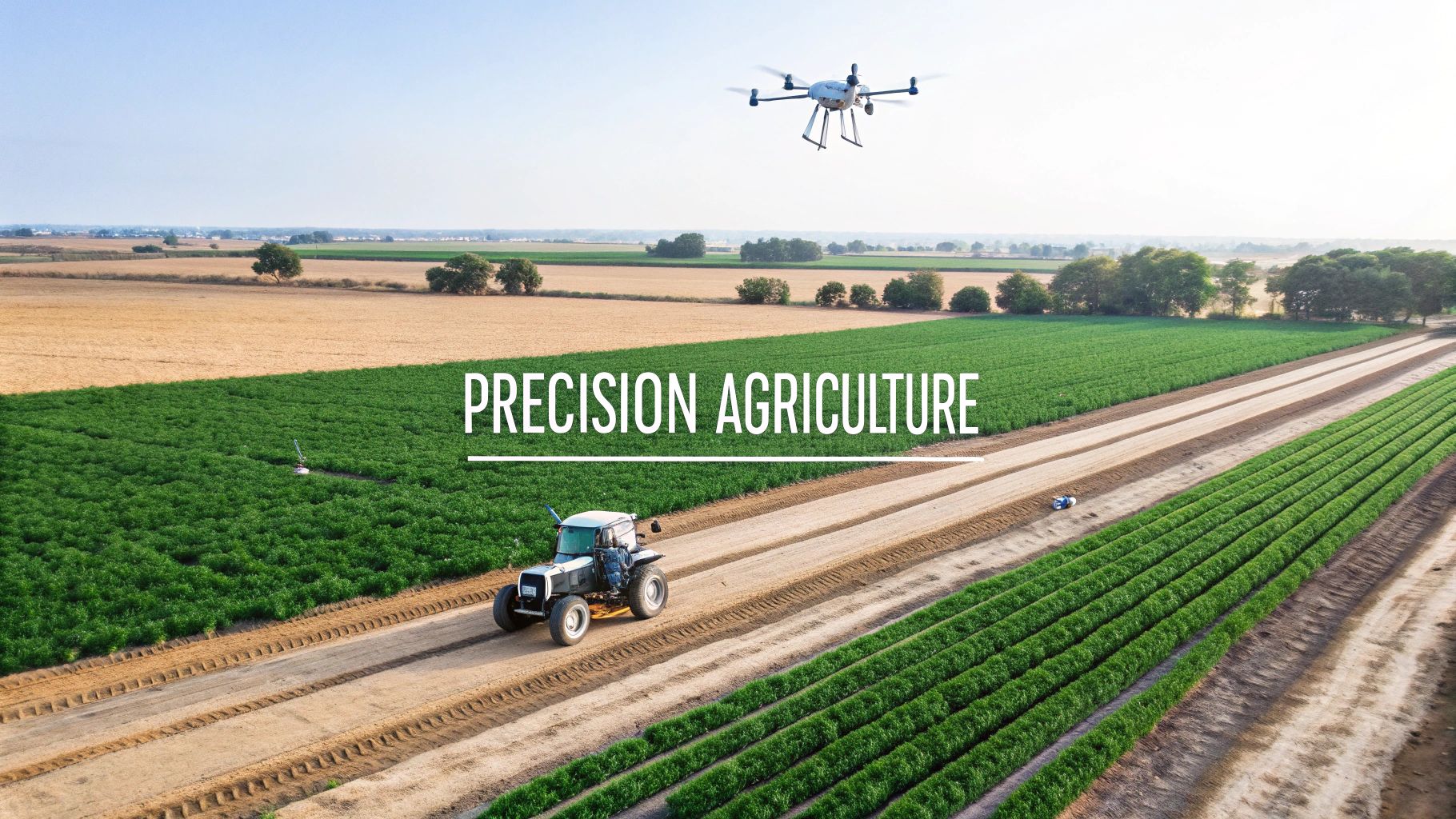
Modern tech has a massive role to play here. Precision agriculture, which uses GPS, sensors, and data, helps make every job on the farm more efficient. This technology allows you to apply seed, fertiliser, and water with pinpoint accuracy, making sure precious resources go exactly where they’re needed. The result? Less waste and bigger yields.
This mindset of efficiency carries through to the small details of farm organisation, too. Something as simple as keeping your wrap and twine clean, dry, and secure prevents costly waste and ensures it works properly when you need it most. Thoughtful storage, like The Wrap Master alternative wrap and twine storage solution, is a straightforward but vital part of a wider strategy to cut waste and run a tighter ship.
How Technology and Innovation Drive Sustainability
The core ideas behind sustainable farming are solid, but it’s modern technology that really brings them to life on today’s UK farms, making them both practical and profitable. Agri-tech acts as the bridge between sustainability goals and day-to-day action, transforming traditional methods into highly efficient, data-driven operations. It’s no longer just about working harder; it’s about working smarter.
This move towards tech-enabled farming is gathering serious pace. Precision and regenerative technologies are now becoming central to UK agriculture, with 71% of farmers already using practices like crop rotation and precision methods. In fact, a recent survey found that 68% of farmers see investing in technology as essential for the future of their business, a clear sign of its role in building resilience. You can explore more predictions about the future of UK farming here.
By bringing the right smart tools onto the farm, you can reduce waste, cut costs, and improve yields—hitting all the key aims of sustainable farming.
Precision Tools for Smarter Farming
One of the biggest wins for technology is its ability to reduce our reliance on chemical inputs. Modern systems give us effective, targeted alternatives that are better for the environment and the farm’s finances.
- Non-Chemical Weed Control: Advanced inter-row systems use precise mechanical tools to clear out weeds without a drop of herbicide. This approach not only protects precious soil biology and nearby water sources but also tackles the growing issue of herbicide resistance, helping to secure crop health for the long term.
- Smart Monitoring: On-farm efficiency gets a huge boost from real-time data. Think about smart tank monitoring for fuel and AdBlue – it completely eliminates the guesswork. You get accurate readings sent straight to your phone, which helps prevent costly run-outs, deters theft, and makes sure you only order what you need. That means less waste and smoother operational planning.
The point of agri-tech isn’t to replace a farmer’s expertise, but to sharpen it. These tools provide the precise data needed to make better-informed decisions, turning every acre and every litre of fuel into a more productive asset.
Innovation as a Long-Term Strategy
Embracing technology is really about future-proofing your business. Environmental regulations are only getting stricter and market pressures are always shifting. Farms that are efficient and data-led will be in the best position to adapt and thrive. Investing in the right equipment is a direct investment in the long-term sustainability and profitability of your farm.
This commitment to finding better ways of working is what pushes the whole industry forward. Exploring ongoing agricultural innovation and R&D is key to finding the next generation of tools that will keep making our farms more sustainable and productive. It’s this spirit of continuous improvement that really defines modern, forward-thinking agriculture.
Understanding Financial Incentives and Government Support
Making the switch to more sustainable farming isn’t just about doing the right thing for the environment; it’s a shrewd business move, especially with the UK government actively backing the transition. These support schemes are designed to pay farmers for delivering public goods, turning good stewardship into a reliable part of your farm’s income.
At the heart of this is the Environmental Land Management (ELM) scheme. For most arable and mixed farms, the most straightforward entry point is the Sustainable Farming Incentive (SFI), which offers direct payments for taking on specific green practices.
This isn’t just pocket change, either. The government is serious about this, pledging over £2.7 billion annually towards nature recovery and sustainable agriculture. It’s a clear signal that the future of farm support is tied directly to environmental outcomes. You can dig deeper into the numbers by reading about government spending on farming and nature.
How You Get Paid for Sustainable Actions
The SFI works on a simple premise: get paid for actions that deliver an environmental benefit. This effectively turns good land management into another cash crop, helping to balance the books and take some of the risk out of moving away from more conventional, input-heavy systems.
The great thing is, the scheme covers a wide range of activities that many farms can slot into their existing rotations without a massive upheaval.
Here are a few common actions you can get paid for:
- Improving Soil Health: You can get paid for things like putting in overwinter cover crops to protect bare soil or moving to a min-till or no-till drilling system to preserve soil structure.
- Enhancing Biodiversity: Actions like managing hedgerows, establishing beetle banks, or planting wildflower margins all create vital habitats and are eligible for funding.
- Protecting Watercourses: Creating grass buffer strips next to rivers and streams is a classic example – it prevents runoff and qualifies for annual payments.
Using Grants for Key Investments
On top of the annual payments, don’t overlook the role of capital grants. These are crucial for helping you invest in the machinery and technology that will make your operation more efficient and environmentally friendly over the long term. A well-timed grant can make a huge difference to your cash flow when buying new kit.
For instance, a grant could significantly cut the cost of a new direct drill needed to implement a no-till system, or perhaps help fund precision technology for more targeted fertiliser and spray applications. This kind of support makes it far easier to get your hands on the tools that not only help the environment but also slash your input costs and make your farm more resilient – hitting all the key principles of sustainable farming.
How British-Made Kit Supports Your Sustainability Goals
Making the switch to sustainable farming is about more than just tweaking your crop rotation. It’s a shift in mindset that touches every part of your operation, making it smarter and more efficient. Investing in the right equipment is where the rubber really meets the road, turning big ideas into tangible savings of time, fuel, and money.
When you choose durable, British-made kit, you’re not just buying a piece of steel; you’re investing in a more productive and resilient future for your farm.
Well-designed machinery helps you get a handle on the everyday jobs that have a direct impact on your sustainability goals, especially when it comes to cutting down on waste and managing resources. It’s all about getting the absolute most out of every litre of fuel and every kilogramme of feed.
Maximising Resources and Reducing Waste
A cornerstone of sustainable farming is simple: waste as little as possible. This isn’t just about being environmentally friendly; it’s a direct boost to your bottom line. Think about leftover material in a silage clamp – that’s not just waste, it’s lost feed and wasted effort.
Using a purpose-built attachment like a Silo Crab loader lets you get right into the corners and recover every last bit of that valuable material. It’s a straightforward bit of kit that ensures nothing gets left behind, perfectly fitting the principle of getting more from less. It turns a potential loss back into a productive asset.
Robust and cleverly designed equipment isn’t an expense; it’s an investment in operational efficiency. By reducing waste and improving organisation, you directly contribute to the economic and environmental pillars of sustainable farming.
Improving Operational Efficiency and Safety
An organised farm is an efficient farm. It sounds simple, but when tools, net wrap, and safety gear are properly stowed and easy to grab, jobs get done faster and, more importantly, safer. Durable, British-made front boxes are a perfect example, keeping your essentials protected from the weather and right where you need them.
This same logic applies to managing vital resources like fuel and AdBlue. Manually dipping tanks is a chore that’s easy to put off, which often leads to last-minute panic buying or over-ordering just in case.
Fitting an agricultural tank monitoring system takes the guesswork out of it, sending accurate, real-time levels straight to your phone. This simple piece of tech stops waste, helps deter theft, and makes sure your machinery is always fuelled and ready to roll, making the whole operation run that much smoother.
Frequently Asked Questions About Sustainable Farming
We get it. Shifting towards more sustainable practices brings up a lot of questions. Let’s tackle a few of the most common ones we hear from farmers across the UK.
Is Sustainable Farming Less Profitable Than Conventional Farming?
It’s a common misconception, but the answer is no—especially in the long run. While some changes might need an initial investment, sustainable farming is really about building a more profitable and resilient business for the future.
Think about it: you start cutting back on expensive inputs like synthetic fertilisers and pesticides. At the same time, you’re building healthier, more productive soil that gives you more reliable yields, year after year. Add in government incentives like the SFI, and the financial picture becomes even clearer. It’s a move from chasing short-term gains to securing long-term stability.
How Can I Start Without a Huge Upfront Investment?
You don’t need to remortgage the farm to get started. The key is to begin with low-cost changes that deliver a big impact.
Sustainable farming is a journey, not a destination. Small, incremental changes build momentum and deliver noticeable benefits to your soil and your balance sheet without requiring a massive initial outlay.
Why not try introducing cover crops on a few fields? Or maybe experiment with reduced tillage on a small scale. Even creating grass buffer strips along waterways is a fantastic first step. These practices start improving your soil health right away, and that’s the foundation of everything. Plus, schemes like the Sustainable Farming Incentive (SFI) are designed to pay you for making these exact changes, helping to cover any costs.
Does Sustainable Farming Mean I Have to Go Fully Organic?
Absolutely not. This is one of the biggest myths out there. Sustainable farming isn’t about rigid rules or chasing a specific certification. It’s a flexible approach focused on finding what works for your farm.
It’s all about continuous improvement. That might mean adopting Integrated Pest Management (IPM) to cut down your chemical use, rather than getting rid of it completely. Or it could involve using precision technology to apply inputs exactly where they’re needed, and nowhere else. It’s about making smart, practical changes that benefit your land and your business.
At JF Hudson Ltd, we design and build durable, British-made equipment to help you achieve your sustainability goals with practical, on-farm solutions. Discover our range of innovative attachments and smart monitoring systems that reduce waste and boost efficiency by visiting our website: https://jfhudson.co.uk